
When people come to us feeling exhausted, moody, or unable to sleep well, thyroid health is often the last thing on their mind. Most of us think about stress, diet, or maybe that extra cup of coffee when our energy crashes or our mood takes a nosedive.
But here’s what we’ve learned after working with countless clients: your thyroid might be the puppet master pulling the strings behind all three of these struggles.
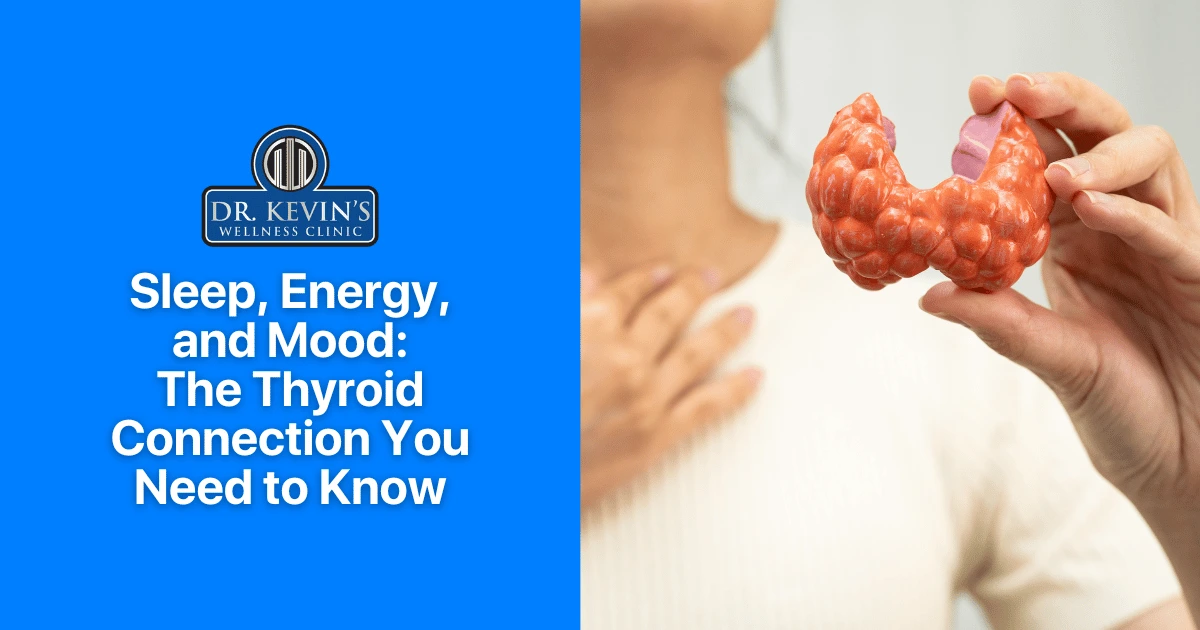
The thyroid is a small, butterfly-shaped gland sitting at the base of your neck, and honestly, most people couldn’t point to it on their body if you asked them to. Yet this little gland has an outsized impact on how we feel every single day. It’s basically your body’s metabolic control center, pumping out hormones that tell every cell in your body how fast or slow to work.
What makes this topic so important is that thyroid-related symptoms are sneaky. They creep up gradually and mimic other conditions so well that people often spend years treating the symptoms without ever addressing the root cause. We see this all the time, and it’s frustrating, because once you understand the thyroid connection, so many puzzle pieces suddenly click into place.
Thyroid and Sleep: The Overlooked Link
Most people never connect their sleep issues to their thyroid, but the relationship is stronger than we might expect. When your thyroid is overactive (hyperthyroidism), it’s like your body is stuck in overdrive even when you’re trying to wind down for the night.
Hyperthyroidism can cause classic insomnia symptoms, but it also brings some less obvious sleep disruptors. Night sweats are common because your metabolism is running so hot. Some people experience this restless, agitated feeling that makes it impossible to get comfortable in bed. Your heart might race, or you might feel like you need to keep moving even though it’s bedtime.
On the other hand, hypothyroidism (an underactive thyroid) creates its own sleep problems, but they look completely different. Instead of being unable to fall asleep, people with hypothyroidism often feel like they could sleep for 12 hours and still wake up tired. You might find yourself falling asleep during the day or feeling drowsy even after what should have been a full night’s rest.
What’s really interesting is how thyroid hormones help regulate our circadian rhythms. These are the internal clocks that tell our bodies when to be alert and when to sleep. When thyroid function is off, these rhythms can get completely scrambled, leading to sleep patterns that don’t match up with day and night cycles.
Thyroid and Energy: Why You Feel Drained (or Wired)
Energy production happens at the cellular level, and thyroid hormones are right there in the middle of it all. Every single cell in your body has receptors for thyroid hormones because these hormones literally determine how efficiently your cells can produce energy from the food you eat and the oxygen you breathe.
When you have hypothyroidism, it’s like all your cells are operating in slow motion. This isn’t just about feeling a little tired. We’re talking about the kind of fatigue where climbing a flight of stairs feels like running a marathon. Your stamina disappears, and activities that used to be easy become exhausting. Some people describe it as feeling like they’re moving through thick mud all day long.
This fatigue doesn’t respond to typical solutions. You can drink more coffee, get more sleep, or try to push through with willpower, but if your thyroid isn’t producing enough hormones, your cells literally can’t generate energy efficiently. It’s a mechanical problem, not a motivation problem.
Hyperthyroidism creates the opposite issue but with its own set of problems. Your cells are producing energy too quickly, which sounds good in theory but feels terrible in practice. You might experience jitteriness, like you’ve had way too much caffeine even when you haven’t had any. Some people feel restless and unable to sit still, but this energy doesn’t feel good or productive. It’s more like being revved up with no clear direction.
Over time, hyperthyroidism often leads to burnout because your body is constantly running at full speed. You might have bursts of manic energy followed by complete crashes. This rollercoaster pattern is exhausting and unsustainable.
There are everyday signs that your energy issues might be thyroid-related rather than just lifestyle-related. If you’re getting adequate sleep but still feeling exhausted, if your energy levels don’t improve with rest or good nutrition, or if your energy patterns seem to have changed dramatically without an obvious cause, it might be worth looking at your thyroid function.
Thyroid and Mood: The Emotional Rollercoaster
The connection between thyroid health and mood is probably one of the most underrecognized relationships in healthcare. Thyroid hormones directly impact the production and function of neurotransmitters like serotonin and dopamine, which are essentially your brain’s mood-regulating chemicals.
Hypothyroidism often shows up as depression that doesn’t quite fit the typical pattern. You might experience brain fog, where thinking feels slow and unclear. There’s often a sense of apathy or emotional flatness, where things that used to bring you joy just don’t seem to matter anymore. Some people describe it as feeling like they’re living life behind a gray filter.
What makes this particularly challenging is that hypothyroidism-related depression often doesn’t respond well to standard antidepressant medications because the root cause isn’t a neurotransmitter imbalance. It’s a hormone deficiency that’s affecting neurotransmitter production.
Hyperthyroidism tends to manifest as anxiety-related mood symptoms. Your heart might race not just physically but emotionally too. Many people experience irritability that seems to come out of nowhere, or panic-like symptoms that feel overwhelming and scary. The anxiety can be constant and generalized, or it might show up as sudden bursts of panic that don’t seem connected to any particular trigger.
The risk of misdiagnosis here is real and unfortunately common. We’ve worked with many clients who spent years being treated for depression or anxiety without anyone checking their thyroid function. They tried multiple medications and therapies that provided minimal relief because they were treating the symptoms while the underlying thyroid issue continued unchecked.
Read also: Hashimoto’s Disease 101: Everything You Need to Know
Connecting the Dots: Sleep, Energy, and Mood
These three areas don’t operate independently. They’re all interconnected, and thyroid dysfunction creates a domino effect that can make everything worse.
When your thyroid disrupts your sleep, you wake up without the restorative rest your body needs to function well. Poor sleep then directly impacts your energy levels throughout the day, making even simple tasks feel overwhelming. When you’re constantly tired and struggling to keep up with daily life, your mood naturally suffers.
But it gets more complicated than that. The stress of feeling tired and moody can actually worsen thyroid function, creating a vicious cycle that’s hard to break. Chronic stress affects the hypothalamic-pituitary-thyroid axis, which is the communication system between your brain and your thyroid gland.
We see this pattern play out all the time: thyroid issues lead to poor sleep, which leads to low energy, which leads to mood problems, which creates more stress, which can worsen thyroid function. It becomes this self-perpetuating cycle where each problem feeds into the others.
Breaking this cycle requires addressing the thyroid dysfunction at its root, not just managing the individual symptoms. You can try sleep aids, energy drinks, and mood stabilizers, but if your thyroid isn’t working properly, you’re essentially trying to fix a car by polishing the exterior while the engine is broken.
If you’re dealing with persistent sleep problems, unexplained fatigue, or mood changes that don’t seem to respond to typical treatments, it’s worth digging deeper into your thyroid health. Don’t just treat the surface-level symptoms when the real solution might be addressing the underlying hormone imbalance that’s driving everything else.
The good news is that thyroid dysfunction is highly treatable once it’s properly identified. We encourage you to schedule an appointment to see if your thyroid health could be the missing piece of your wellness puzzle.
Sometimes, the biggest improvements come from addressing the one thing you never thought to check. Our wellness clinic in Lafayette, LA, is ready to provide effective thyroid treatment that tackles not just the symptoms, but the root causes for lasting relief.