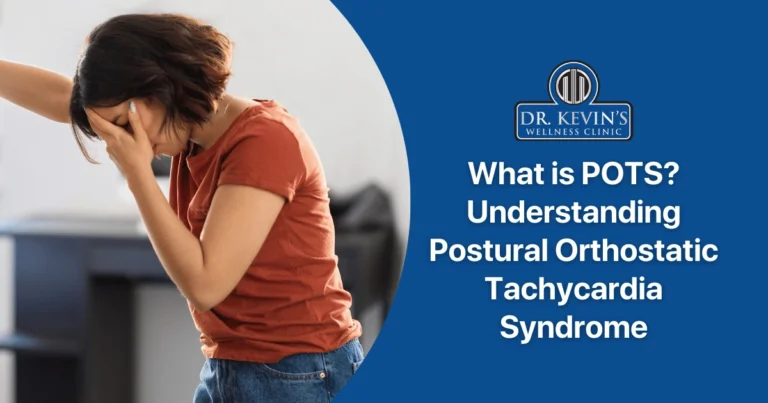
If you often notice your heart racing, feel dizzy, or experience other uncomfortable symptoms when you stand up, these could be signs of a condition known as POTS, short for Postural Orthostatic Tachycardia Syndrome.
In recent years, POTS has gained much more attention in the medical community, partly because of its connection to long COVID. Some people who recovered from COVID-19 began noticing lingering symptoms such as dizziness, fatigue, and a rapid heartbeat, which later led to a POTS diagnosis.
What is Postural Orthostatic Tachycardia Syndrome (POTS)?
POTS is a condition that affects the autonomic nervous system, which acts as your body’s control center for automatic functions like regulating heart rate, blood pressure, digestion, and body temperature.
In people with POTS, the body struggles to adjust properly when changing positions, especially when moving from sitting or lying down to standing. Normally, your autonomic nervous system quickly balances your blood flow so that enough oxygen reaches your brain and vital organs. With POTS, this process doesn’t happen as smoothly, which can lead to dizziness, lightheadedness, and a rapid heartbeat upon standing.
The term “postural orthostatic” describes what happens when your body changes position. When someone with POTS stands up, their heart rate increases much more than normal. Typically, it rises by 30 beats per minute or more within 10 minutes of standing, and for younger individuals, it can increase by 40 beats per minute or more. This happens because blood tends to pool in the lower body, and the heart races to compensate for the reduced blood flow reaching the brain.
Common Symptoms of POTS
Rapid Heartbeat When Standing
One of the most noticeable symptoms is a fast heartbeat when you stand up. It can feel like your heart is pounding hard or racing for no clear reason. This happens because your heart is working extra hard to move blood to your brain and other organs.
Dizziness, Lightheadedness, and Fainting
Feeling dizzy or lightheaded after standing is another classic sign. Some people feel like they might pass out, and in more severe cases, fainting actually happens. This occurs when blood doesn’t reach the brain quickly enough.
Fatigue and Brain Fog
Severe fatigue is extremely common. It’s not the typical tiredness that goes away after rest; it’s a deep exhaustion that lingers. Since your body is constantly trying to correct circulation problems, it burns through energy faster. Many people also experience brain fog, making it hard to focus, think clearly, or remember things.
Nausea and Digestive Issues
Digestive problems often come along with POTS. Since the autonomic nervous system controls digestion, when it’s not working properly, nausea, bloating, or changes in appetite can occur. Some people also experience stomach pain or irregular bowel habits.
Temperature Regulation Problems
Temperature control can become unpredictable. You might feel too hot or too cold for no clear reason, or have trouble adapting to normal temperature changes. Sweating too much or too little is also common.
It’s important to note that POTS affects everyone differently. Some people only have mild symptoms that interfere with daily life occasionally, while others find it completely overwhelming. Symptoms can also fluctuate, with good days and bad days, which can make the condition difficult to manage.
What Causes POTS?
POTS doesn’t stem from one single cause, which makes it challenging to diagnose and manage. Instead, it’s usually the result of a combination of factors that affect how the autonomic nervous system functions.
Nerve Damage or Dysfunction
One possible cause is nerve damage or dysfunction. If the nerves responsible for controlling blood vessel tightening and heart rate don’t work properly, your body can’t adjust as it should when you change positions. This kind of nerve dysfunction can happen for several reasons and affects how signals are transmitted throughout the autonomic nervous system.
Low Blood Volume
Having low blood volume is another contributing factor. When there isn’t enough blood circulating in your system, your heart has to pump faster to keep blood flowing to vital organs, especially when you stand up. This can cause a rapid increase in heart rate typical of POTS.
Genetic Predisposition
There’s also evidence that genetics can play a role. POTS sometimes runs in families, suggesting there may be inherited traits that influence how the autonomic nervous system develops or regulates blood flow.
Autoimmune Conditions
Autoimmune disorders are another possible trigger. In some cases, the immune system mistakenly attacks parts of the autonomic nervous system, disrupting its normal function.
Viral Infections and Post-Viral Syndrome
Viral infections have become a well-recognized cause, especially since the emergence of long COVID. Some people develop POTS after recovering from a viral illness, likely because the infection damages nerve pathways or triggers an autoimmune reaction. COVID-19 brought this connection into focus, but other viruses have also been linked to post-viral POTS.
Getting Help for POTS
POTS is a complicated condition with many possible causes, which makes it difficult to treat with a one-size-fits-all approach. Traditional treatments often focus on reducing symptoms without addressing what is actually causing them. You might be prescribed medications to control heart rate, increase blood volume, or manage dizziness, and while these can bring some relief, they usually do not fix the underlying imbalance in the autonomic nervous system. In many cases, the deeper triggers, such as nerve issues or autoimmune activity, remain unaddressed.
Our Root Cause Approach to POTS Treatment
Our approach focuses on uncovering and treating the root causes behind your POTS symptoms. Through advanced testing and a detailed evaluation of your health history, we look at all the potential factors that could be contributing to your condition. This allows us to create a treatment plan that targets the actual source of the problem rather than just masking the symptoms.
Our POTS treatment in Lafayette is built around one purpose: helping you feel better and regain control of your life. Every treatment plan is personalized to your needs and based on what is most effective for your specific situation. If you are ready to stop feeling held back by your symptoms, schedule a consultation with us. Together, we will identify what is driving your POTS and create a plan to help you move forward.